
Making kimchi at home is one of those small kitchen projects that feels more rewarding every time you do it. But once you’ve got a jar (or a few) sitting in the fridge, it’s worth knowing that kimchi does a lot more than sit quietly alongside your meals. We’ve taught you how to ferment kimchi. Now we want to show you how to cook with it. From quick weeknight dinners to dishes worth making on a Sunday afternoon, these are our favourite ways to put that jar to good use.
1. Kimchi FRIED RICE (KIMCHI BOKKEUMBAP)
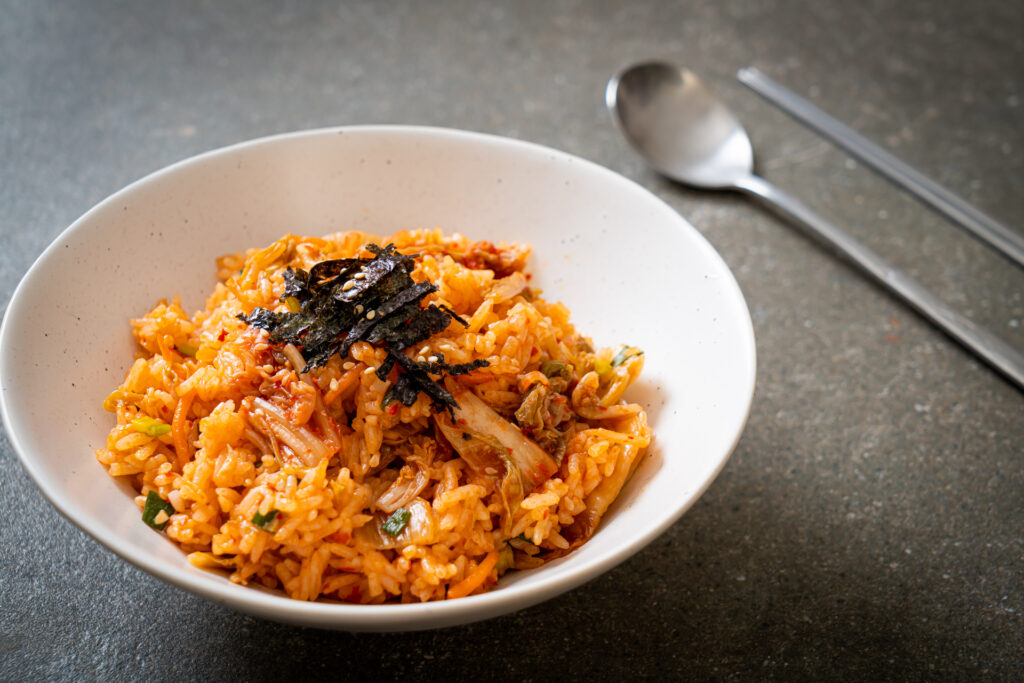
Kimchi fried rice is the dish most home cooks come back to again and again, and for good reason. Day-old rice is stir-fried with well-fermented kimchi and a splash of the brine, creating something deeply savoury and satisfyingly rich. It’s also a great way to use other leftovers, from bits of chicken to odds-and-ends vegetables. A fried egg on top is non-negotiable. You’ll want aged kimchi here (the more sour, the better) for beautiful caramelisation. Then add a little sesame oil, gochujang, and perhaps some diced spam or bacon to round things out. The best part? The whole project wraps up in under fifteen minutes, making it a quick and easy fix for weeknights.
2. Kimchi Pancake (Kimchijeon)
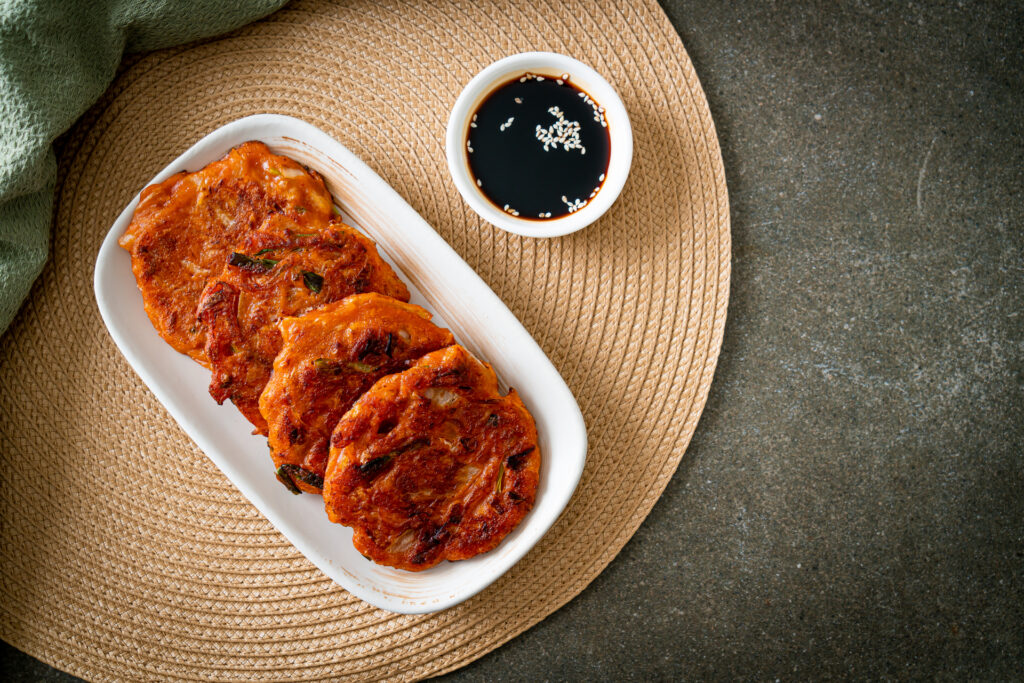
Crispy on the outside, chewy on the inside, and packed with punchy flavour, kimchijeon is the kind of dish that disappears fast, whether served solo or to share. The batter is simple, featuring flour, water, chopped kimchi and kimchi brine for extra depth. Putting aside accessibility, though, the trick is getting the pan properly hot and using enough oil to achieve that signature lacy, golden crust. Overly thick batter is the enemy here, so make sure to keep it loose. Serve it cut into squares or wedges with a soy and sesame dipping sauce alongside. It works as a starter, a snack, or just a very good reason to have people over.
3. Kimchi Stew (Kimchi Jjigae)
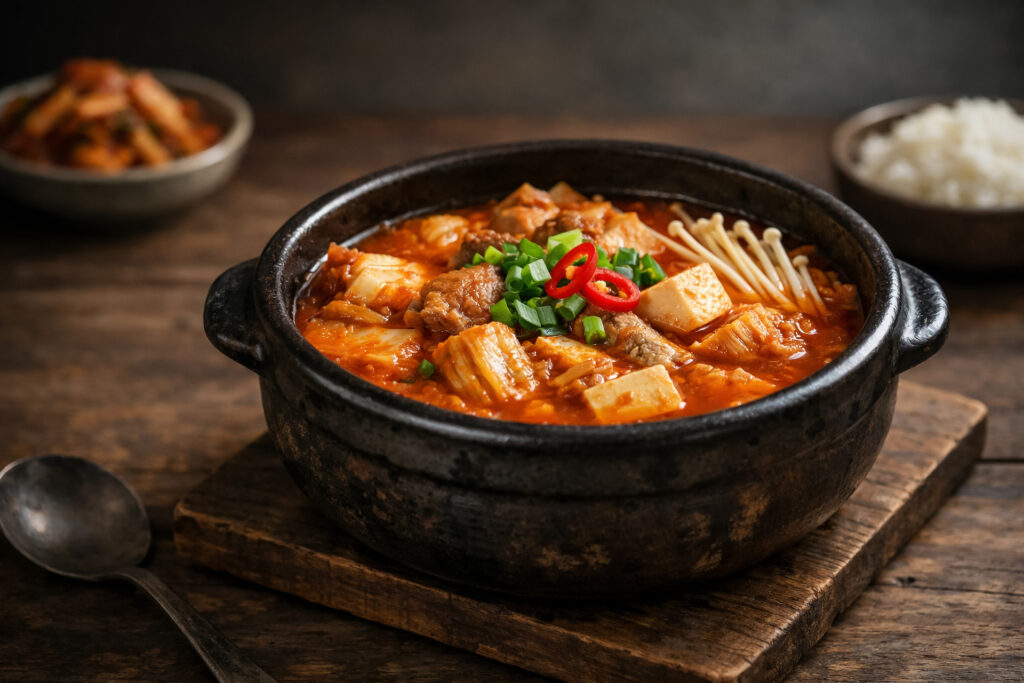
Few dishes are as deeply comforting as a bubbling pot of kimchi jjigae, and all the more so on a rainy day. Built on a foundation of aged kimchi, pork belly or tinned tuna, tofu, and a simple anchovy stock, it’s the kind of stew that makes your stomach radiate with soothing warmth. Kimchi’s role here is central, as it breaks down during cooking, turning the broth silky and sour in the best possible lip-smacking way. Old, well-fermented kimchi creates the best results. Don’t rush it because a longer simmer develops the flavour considerably. Serve it straight from the pot with steamed rice and a few banchan on the side.
4. Kimchi Dumplings (Kimchi Mandu)
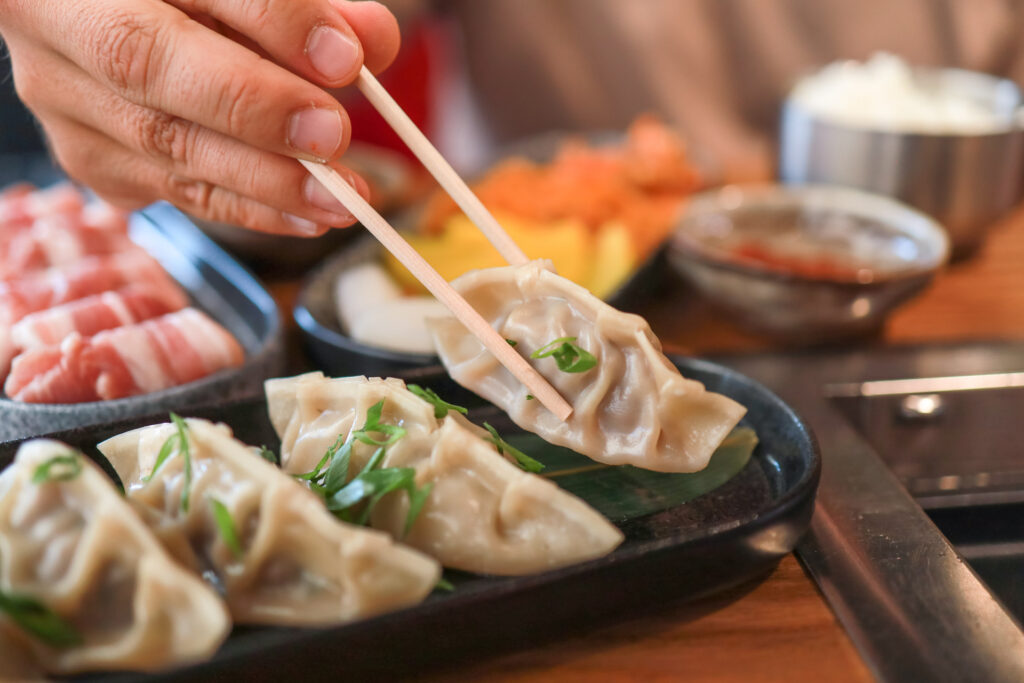
Mandu are Korean dumplings, and the kimchi version is one of the most flavourful in the family. The filling typically combines finely chopped kimchi, well-squeezed to remove excess moisture and mixed with minced pork, tofu, glass noodles and aromatics like garlic and ginger. Getting the moisture out of the kimchi is the most important step. If you skip it, you might end up with soggy dumplings, which can fall apart when cooked. Versatile for any meal or snack, they can be steamed, pan-fried for a crispy base, or dropped into a light broth. You can even make a large batch and freeze half—they’re exactly what you’ll want on a night when cooking feels like too much or when you need something guaranteed to impress but don’t have time to prep. It’s sure to be a crowd pleaser.
5. Braised Kimchi with Pork (Kimchi Jjim)
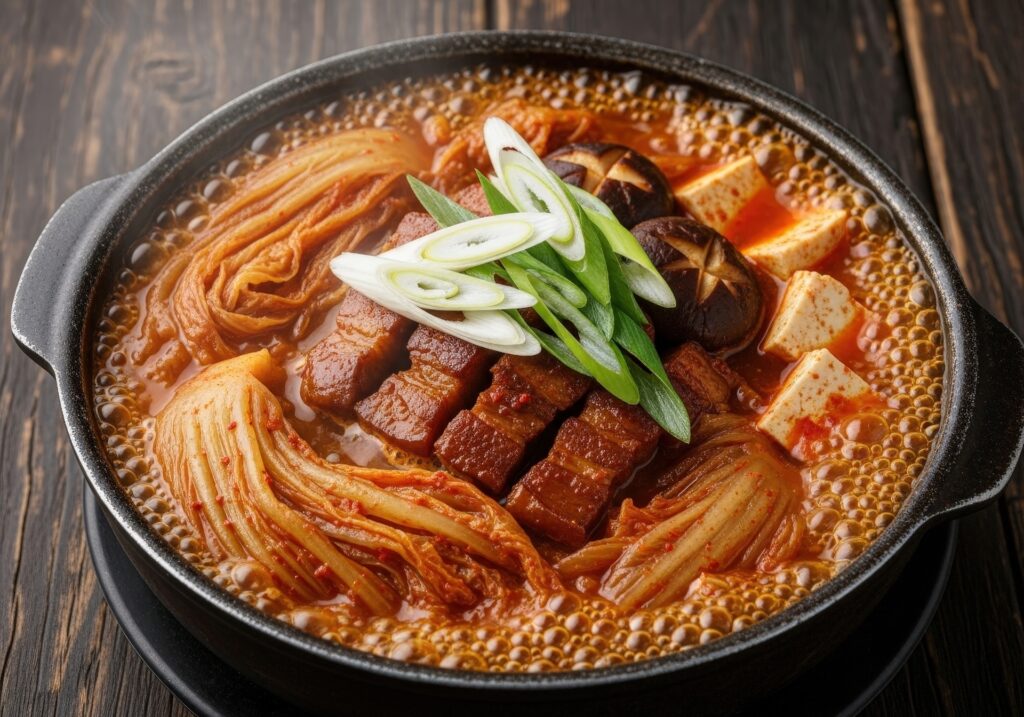
When you let kimchi and pork belly become something greater than the sum of their parts, you end up with kimchi jjim. This outcome is far from a compromise. The two are braised low and slow together until the pork is meltingly tender and the kimchi has soaked up all that rich, fatty flavour, resulting in a dish intensely savoury, a little spicy and deeply satisfying. Older, more sour kimchi works best here, holding up to the long cook and with an acidity that cuts beautifully through the richness of the pork. If you’re hunkering down on a weekend, this is one we’ll recommend to keep you company. And like almost all Korean meals, all you’ll need to go with is a bowl of rice and a handful of side dishes, only if you’re feeling fancy.
Bonus: Kimchi Bibimbap
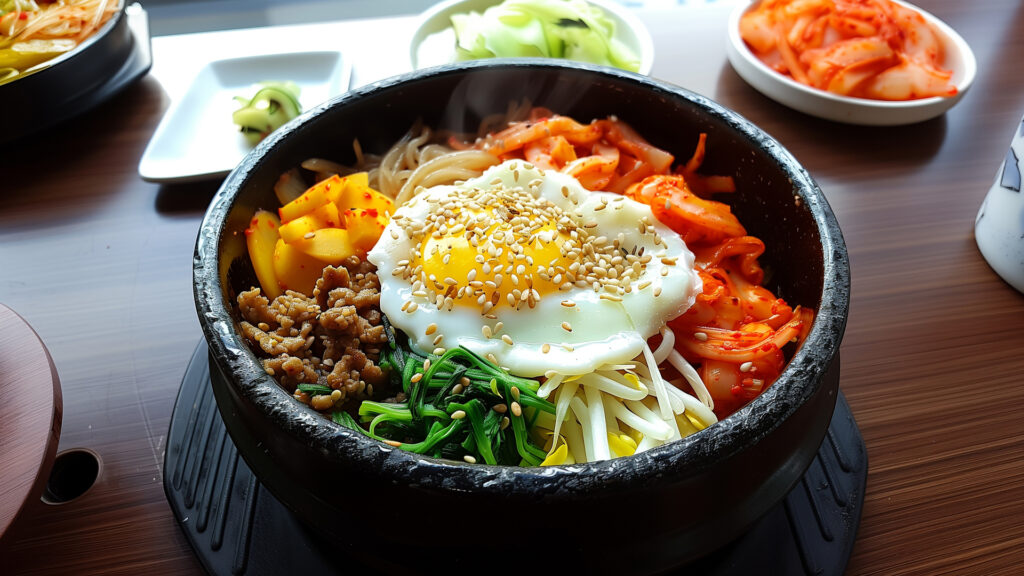
The iconic mixed rice bowl gets a bold upgrade when kimchi enters the picture. Alongside the usual cast of seasoned vegetables, a fried egg and a generous spoonful of gochujang, kimchi adds a layer of fermented, tangy heat that lifts the hearty bibimbap. The real joy is in the mixing: everything gets tumbled together until the rice is stained red and every bite carries a hint of everything. Use well-fermented kimchi roughly chopped, and don’t be shy with the sesame oil. Plus, it’s endlessly adaptable, so you can add leftover meat or swap the vegetables for what you have, and it’ll still feel like a proper meal.
Final Note
All of these dishes are only as good as the kimchi you start with. Truly great kimchi is one made with care, good ingredients and enough time to ferment properly. This method always boasts a complexity that shop-bought versions rarely match.
If you’d rather leave it to the experts, Nami Korean Grill House serves kimchi the way it’s meant to be: made in-house, deeply flavoured, and tended to with the kind of attention that only comes from genuine culinary tradition. Made right here in Singapore, but held to the standards that matter, our kimchi is as authentic as it gets, served alongside a full spread of banchan to round out your Korean barbecue spread.
Pull up a seat at the grill, order to your heart’s desire, and let the kimchi speak for itself. Reservations are open. Visit us today.

